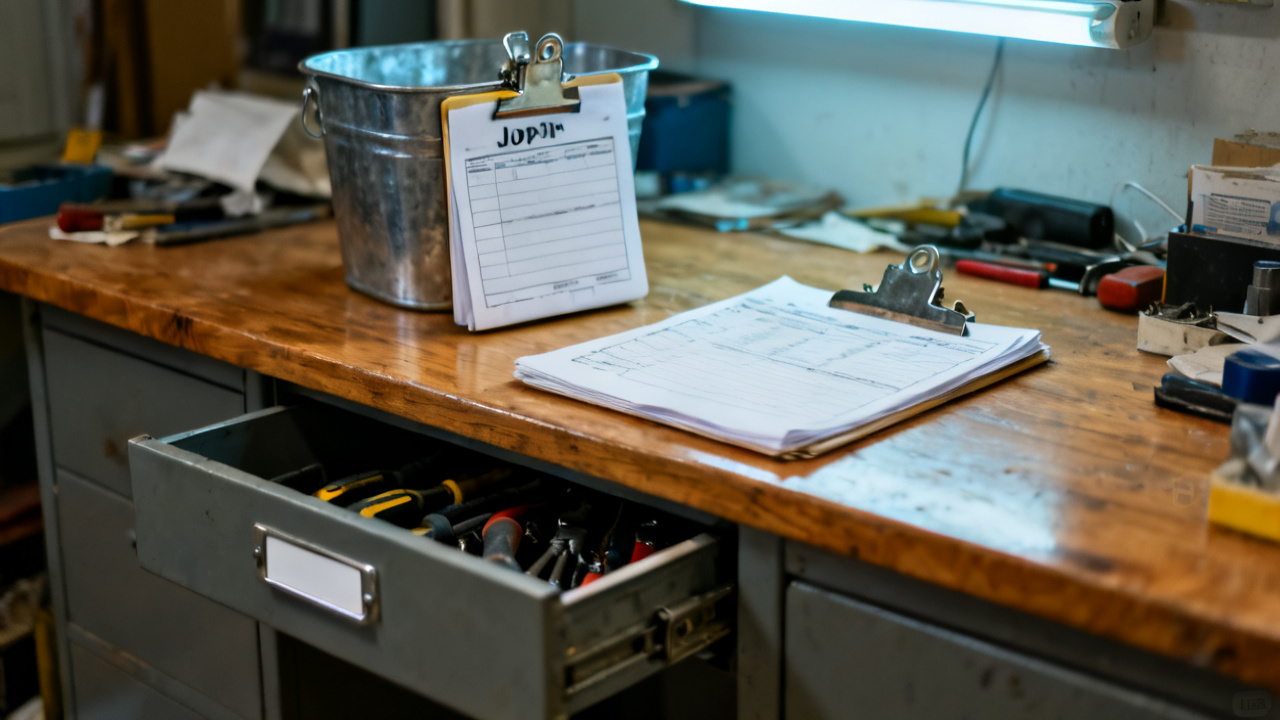
The back of the traveler lists serials. The tags on the parts are separate. You’re running through the batch of 4130 steel clevis brackets laid out at your bench, so you flip the traveler over to cross-reference each etched tag against the logged numbers before you start deburring the threaded bores. If a number doesn’t match, you set that part aside in the red labeled bin next to your vise instead of moving it to the next operation.
Logged Serial Sets on This Traveler
The serials logged on this document tie directly to the heat lot of the raw stock used for this batch, with no duplicates across the entire production run for this client order. You don’t add any new serials to this list yourself; all entries are populated by the stock prep team before the traveler ever reaches your bench, so you only reference what’s already printed on the back. If you notice a blank space or smudged number that’s unreadable, you flag it immediately instead of guessing at the intended entry. You avoid making assumptions about missing or faded numbers, even if you’ve run dozens of identical batches before, because small variances in stock allocation can lead to mismatches that cause delays later in the production process. Any gaps in the serial list mean the stock prep team has pulled a part for pre-inspection, so you only work with parts whose tags match a fully legible serial on the sheet.

Part Tag Matching Rules for This Sheet
Every part in your current batch has a 6-digit alphanumeric tag etched into its non-mating surface, right above the part number stamping. You align each tag exactly to the entry on the back of the traveler, making sure both the letter prefix and number suffix match 100% before you process the part. You don’t rely on the order of parts in the bin to match the order of serials on the sheet; you check each one individually, even if you’re running behind on your shift quota. Partial matches, like a tag that reads S12790-B instead of the logged S12790-A, mean the part belongs to a different sub-batch for a separate order, so you set those aside immediately without processing. You also check that the etch is deep enough to survive the powder coating step later in the process, and if you can scratch the tag off with a fingernail, you note that on the traveler and set the part aside for re-etching.
Cross-Reference Entries for This Traveler Document
You use this cross-reference to match each part to its corresponding task, marking the completion box next to each serial once you finish deburring and chamfering the threaded bore to the required 0.005 inch edge radius. You only mark a serial complete if the part tag matches exactly, no exceptions. The table below lists all active serials for this current batch, plus any hold flags that require extra attention before you process the part:
| Serial Number (Traveler Back) | Part Tag Etching | Required Bench Operation | Hold Flag Status |
|---|---|---|---|
| S12789 | S12789-A | Debur M12 threaded bore, 0.005″ chamfer | None |
| S12790 | S12790-A | Debur M12 threaded bore, 0.005″ chamfer | None |
| S12791 | S12791-A | Debur M12 threaded bore, 0.005″ chamfer | None |
| S12792 | S12792-A | Debur M12 threaded bore, 0.005″ chamfer | QC Hold – review for stock pitting |
| S12793 | S12793-A | Debur M12 threaded bore, 0.005″ chamfer | None |
Illustrative example: If you are processing 12 parts total for a smaller sub-batch, you cross off each serial on the back of the sheet as you go to avoid accidentally processing the same part twice or overlooking a required check. You keep the traveler propped up on the edge of your bench within your line of sight as you work, so you can reference it after you finish each part without walking across the shop floor. If you have to step away from your bench mid-batch, you tuck the traveler into the slot on the side of your finished parts bin to keep it from getting lost or covered in metal shavings.
Discrepancy Tracking Notes for This Form
If you find a part tag that doesn’t match any serial on the back of the traveler, you place the part in the red discrepancy bin at the end of your bench and jot the mismatched tag number in the blank margin on the back of the sheet, along with the date and your initials. You don’t alter any pre-printed serial numbers on the traveler, even if you think you spot a typo; you leave that correction for the production coordinator to review and update in the system. If you find a part that has no tag at all, you set it aside with a sticky note marked “no serial” and add a note to the margin of the traveler so the next person working on this batch knows to pull it for tag re-etching before proceeding. If you have questions about a mismatched serial or hold flag, you bring the traveler to the Traveler Desk for clarification before moving forward with any work on the affected part. You also note any damage you spot on a part, like a cracked edge or stripped thread, next to its corresponding serial on the sheet, so the QC team knows to pull that part for further inspection when the batch moves to their station. You don’t discard any parts from the batch yourself, even if you spot obvious damage, because the production team tracks all scrap parts against their serial numbers for material waste reporting.
Next Shift Review Check for This Traveler Sheet
When you pick this traveler up again at the start of your next shift, you first cross-check all the serials you marked complete during your previous shift against the parts stacked in the finished bin next to your vise, to make sure you didn’t miss any entries or mark a serial complete by mistake. You also review any notes added to the margin by the night shift team or production coordinator, to see if any hold flags were lifted or new serials were added to the batch while you were away. You don’t start processing any new parts for this batch until you confirm all previous entries align with the physical parts in front of you, and all open discrepancies noted on the sheet are resolved. If you see a note that a serial was re-assigned to a different part, you update your cross-reference list before moving on to the next operation. You also check that all parts in the finished bin have their tags intact, and if any tags were rubbed off during processing, you note that on the traveler before re-etching the tag yourself. Once you confirm all previous work is logged correctly, you resume processing the remaining parts in the batch, following the same matching and cross-reference steps you used during your previous shift. If you are handing the batch off to a different team member at the end of your shift, you leave the traveler open to the back page with the serial list, so the next person can pick up where you left off without searching for the correct entries.